Prioritizing Safety: When to Seek Professional Tree Removal Services
Tree removal is an important consideration for homeowners. Safety should remain the primary concern, especially when trees pose potential hazards. Damaged or unhealthy trees can endanger both property and people. Recognizing the signs that indicate a tree's removal is necessary is essential. Property owners need to be aware of the dangers present and the advantages of hiring professionals. The actions taken throughout this process can be decisive in maintaining a secure environment.
Understanding When Your Tree Presents a Risk
Meteorological conditions also serve a vital function; powerful gusts or intense storms can aggravate an already weakened tree. Periodic inspections by a qualified arborist can help recognize these risks before they intensify. Homeowners should maintain awareness, especially after extreme weather episodes, and move swiftly if they spot alarming warning signs. Ultimately, early recognition and intervention can prevent accidents and protect both property and lives.
The Risks of Ignoring Tree Health
Neglecting tree health can lead to significant risks for homeowners and their properties. Unattended trees may develop structural weaknesses, increasing the likelihood of branches breaking or entire trees falling, especially during storms. Such occurrences create hazards not only for the property and adjacent structures but also for anyone in the immediate area. Additionally, unhealthy trees can attract pests and diseases, which may spread to healthy vegetation, compromising the entire landscape. This likelihood of widespread damage introduces greater financial pressure, as the costs associated with treatment or removal can grow substantially. Beyond that, deteriorating trees can lower property value, influencing marketability when homeowners decide to sell. Property owners may encounter not only visual concerns but also concealed legal responsibilities. Therefore, consistent upkeep and focus on tree health are vital in reducing these risks and preserving the safety and appeal of the property.
Detecting Tree Diseases That Require Professional Help
How can property owners successfully detect tree diseases that demand professional care? Identifying symptoms early is vital for maintaining tree health and safety. Residents should be on the lookout for warning signs including discolored leaves, unexpected growths, or bark irregularities. Drooping, restricted growth, or abrupt leaf loss may signal that a tree is under stress. The presence of fungal formations, such as mushrooms near the base, can indicate underlying root issues, while cankers and seeping sap may be signs of infection.
Furthermore, bug infestations, shown by damaged leaves or insect presence, can compromise tree health and increase disease vulnerability. Trees showing such indicators often demand specialized inspection, as neglected concerns may contribute to structural failure. Consulting professional arborists assists in securing accurate diagnoses and appropriate treatment plans, protecting both the trees and the surrounding environment. Identifying these indicators promptly enables homeowners to act preventively, promoting long-term health and safety.
How Tree Proximity to Structures Affects Safety
Tree health is affected not just by diseases but also significantly by how close trees are to nearby structures. Trees that are situated too near to buildings, fences, or sidewalks can present serious safety hazards. The roots of such trees can undermine foundations and result in structural damage, while their branches can obstruct roofs, gutters, or power lines during severe weather. Furthermore, trees that extend over properties may become dangerous as they risk falling during strong winds or harsh weather conditions.
In urban environments, restricted areas influence how trees grow, frequently leading to weaker limbs and poor structural characteristics. This nearness can likewise intensify competition for water and nutrients, thereby reducing the vitality of the trees. Periodic inspections are critical to assess the dangers linked to trees situated near structures, accounting for their type, scale, and overall condition. Ensuring adequate distance between trees and structures can mitigate safety concerns and promote healthier growth.
Reasons You Should Consider Hiring Tree Removal Experts
Employing skilled tree removal professionals offers notable benefits due to their expertise and experience in the field. These professionals are well-equipped to handle complex tasks while minimizing safety risks and liability concerns. Choosing their services provides both effective tree management and peace of mind for property owners.
Expertise And Background
When dealing with the demanding task of removing a tree, individuals often underestimate the complexities involved. Qualified tree removal specialists bring a great deal of expertise and experience that is crucial for proper and secure removal. Skilled arborists possess extensive knowledge of the biology of trees, developmental patterns, and the specific techniques required for various tree species. Their expertise allows them to analyze the situation correctly, identifying potential hazards and establishing the optimal method for removal. Moreover, professionals are outfitted with professional-grade tools and equipment that improve accuracy and efficiency, reducing the chance of harm to nearby structures. By hiring experts, property owners can guarantee that the job is completed correctly, ultimately preserving time and minimizing stress.
Security And Liability Risks
Tree removal can create substantial risks to safety and liability that are often overlooked by those attempting the task themselves. Those without proper training may fail to appreciate the complexities involved, leading to accidents that can lead to harm or structural damage. Dropping limbs can cause injury to people in the vicinity, while improper handling of tools may result in personal harm. Moreover, if damage occurs to neighboring properties, the homeowner may be legally accountable for the damages. Professional tree removal services are equipped with expert knowledge, safety equipment, and comprehensive insurance to reduce these dangers. By working with qualified professionals, homeowners can ensure a much safer experience but also safeguard against potential liability, making qualified professional help a wise decision for any tree removal needs.
What You Can Expect During Professional Tree Removal
When professional tree removal is performed, the operation begins with an initial inspection to evaluate the tree's condition and surrounding environment. Specialized equipment and techniques are then employed to ensure safe and efficient removal. Lastly, post-removal tidying measures are carried out to rehabilitate the surrounding space, leaving it tidy and free of debris.
Initial Assessment Process
Prior to any tree removal, a thorough preliminary assessment is vital to guarantee efficiency and safety. Throughout this process, skilled specialists will assess the tree's size, condition, and positioning in relation to surrounding structures and power lines. They will also detect likely risks, such as dead limbs or infection, that could hinder the removal process. Examining the nearby surroundings helps determine the optimal strategy and essential precautions. The professionals may also discuss the property owner's goals and concerns to ensure agreement on the overall plan. This detailed evaluation lays the groundwork for a safe and effective procedure, limiting safety concerns and ensuring that the project adheres to established safety guidelines and local regulations. A thorough assessment is essential for a successful removal process.
Tools and Methods Employed
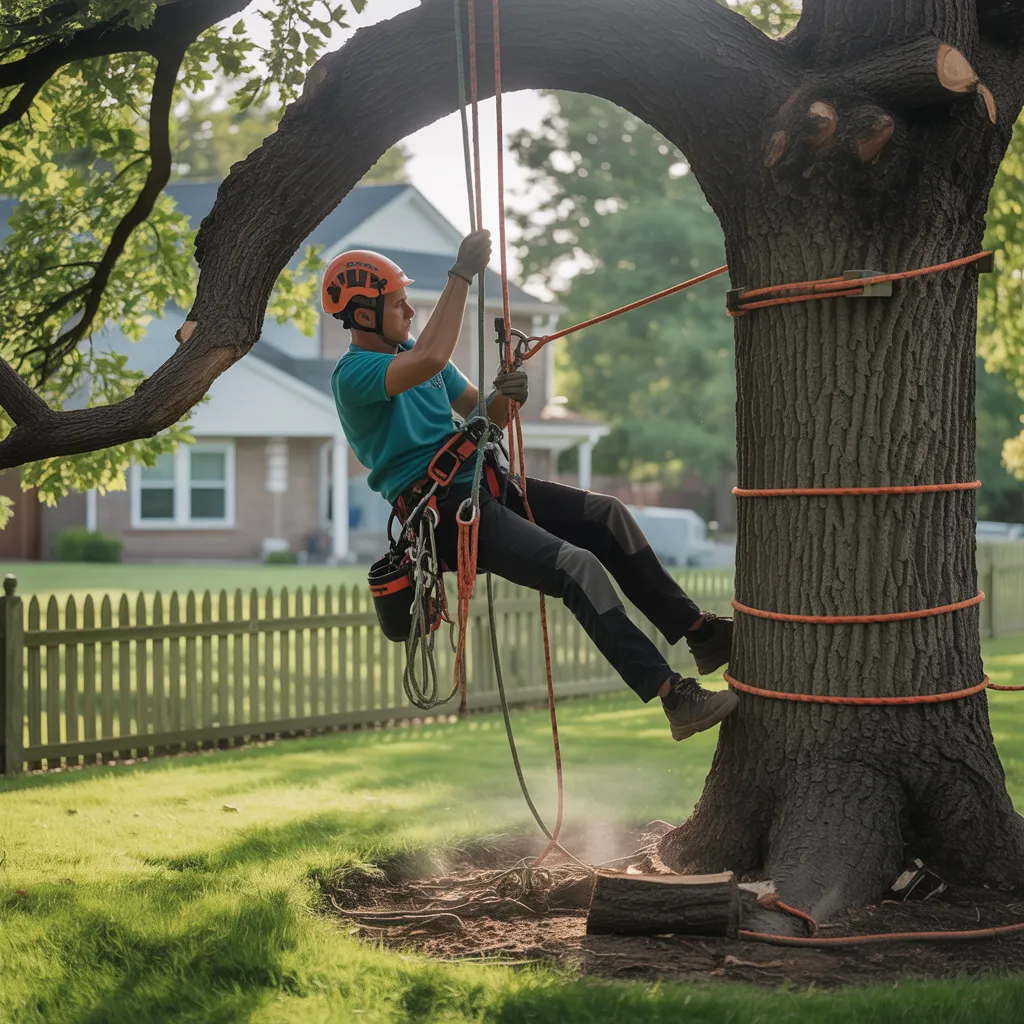
While each tree removal project is unique, experts generally depend on an array of specialized tools and methods to make certain the work is carried out safely and with precision. Chainsaws are a primary tool, facilitating exact cuts through the trunk and branches. Arborists often employ ropes and harnesses to protect themselves and guide the controlled descent of large limbs. On certain occasions, cranes or aerial lift trucks are deployed to access taller trees safely. Additionally, chippers are used to process branches into mulch, reducing excess waste material. Experts carefully evaluate the surrounding environment to establish the most suitable method, frequently using techniques such as directional felling to control where the tree falls. Such meticulous planning and strategic equipment selection work together to deliver a smooth and secure removal process.
Steps for Cleanup After Removal
After the tree has been safely removed, the cleanup work commences to return the area to its original condition. The skilled technicians will initially clear away substantial branches and trunk sections, often cutting them into manageable pieces. Stump removal may then occur, where the residual stump is ground beneath ground level, minimizing its visibility and preventing regrowth.
Next, any remaining debris, such as leaves and small branches, is collected and removed. The professionals may also take care of any harm done to surrounding vegetation or grass, preserving the overall landscape. Upon completion, they will go over replanting or landscaping possibilities for the area if needed. At every stage, safety is kept at the forefront, guaranteeing the area is left clean and safe for the property owner.
Common Questions and Answers
What Does Professional Tree Removal Usually Cost?
The typical cost of professional tree removal ranges between $200 and $2,000, with costs influenced by factors like tree size, location, and accessibility. Additional services, like stump grinding and debris removal, may increase overall expenses for homeowners.
Is It Legal for Me to Remove a Tree on My Own?
Yes, people can lawfully handle tree removal themselves, provided they comply with local regulations and obtain necessary permits. Nevertheless, it is important to carefully consider the risks and possible liabilities connected to the job before taking action.
What Permits Are Needed for Tree Removal?
Generally, a tree removal permit might be necessary based on local ordinances, the tree species, and its size. Homeowners should check with municipal authorities to verify compliance with any necessary permits before proceeding with removal.
What Is the Duration of the Tree Removal Process?
The process of removing a tree generally requires several hours to a full day, influenced by factors such as tree size, location, and complexity. Factors like permit requirements and weather conditions may also affect the overall duration of the project.
Will Tree Removal Damage My Lawn or Landscaping?
Tree cutting and removal has the potential to harm lawns and landscaping, particularly due to the use of heavy machinery and interference with learn here underground roots. Nevertheless, experienced tree removal experts often take precautions to minimize impact, guaranteeing that the property is returned as much as possible afterward.